
What Is a Radon Test? How Much Does Radon Mitigation Cost?

Radon Testing: What Every Homeowner Should Know Before Buying or Selling a Home
Radon is one of those home-related concerns that is easy to overlook because you cannot see, smell, or taste it. But for homeowners, homebuyers, and sellers, understanding radon can be an important part of making informed decisions about a property.
So, what is a radon test? How does radon get into a home? Should you get a radon test with your home inspection? And if the results are high, how much does radon mitigation cost?
The good news is that testing for radon is relatively simple, and elevated radon levels can usually be reduced with a properly designed mitigation system.
This guide explains what homeowners and homebuyers should know about radon testing, how different types of tests work, how to understand your results, and what to expect if mitigation is needed.
What Is Radon?
Radon is a naturally occurring radioactive gas produced by the breakdown of uranium in soil, rock, and water. Because it is colorless, odorless, and tasteless, there is no way to know whether a home has elevated radon levels without testing.
Radon typically moves through the soil beneath a home and can enter through cracks and openings in foundations, construction joints, gaps around pipes, sump pits, floor drains, crawl spaces, and other pathways. It can also enter through well water in some circumstances.
Once inside, radon can accumulate, particularly in lower levels of a home.
Importantly, any home can have elevated radon levels. New or old homes, homes with or without basements, and well-sealed or drafty homes can all test positive. A neighboring property's test result also cannot tell you what the radon level is inside your home. The only way to know is to test.
Why Does Radon Testing Matter?
Long-term exposure to elevated radon can increase the risk of lung cancer. The EPA identifies radon as the second-leading cause of lung cancer in the United States after smoking and estimates that radon exposure is associated with about 21,000 lung cancer deaths each year.
There are no immediate symptoms from radon exposure, which is one reason testing is so important. You cannot determine whether a home has elevated levels based on how it looks, smells, or feels.
The EPA recommends testing homes below the third floor, and specifically recommends radon testing when buying or selling a home.
Testing does not mean there is necessarily a problem. It simply gives you information about the home's current radon level so you can decide whether additional action is needed.
Should You Get a Radon Test With Your Home Inspection?
For most homebuyers, yes, radon testing is worth considering as part of the home inspection process.
A standard home inspection and a radon test serve different purposes. A home inspection evaluates the physical condition of the property, while a radon test measures the concentration of radon in the indoor air.
Because radon cannot be identified through a visual inspection, a home inspector cannot simply look around a basement or crawl space and determine whether the home has elevated radon.
If you're buying a home, consider arranging the radon test early enough in the inspection period that you have time to review the results and address any concerns before closing.
The EPA's homebuyer guidance specifically recommends knowing the indoor radon level of a home you are considering purchasing. If the home has already been tested, buyers should review the previous results, when the test was performed, where it was conducted, who conducted it, and whether the home has undergone renovations or HVAC changes since the test.
Why Professional Testing Can Make Sense During a Real Estate Transaction
DIY radon tests are a legitimate option for homeowners. However, real estate transactions are time-sensitive, and testing needs to follow specific protocols to produce reliable results.
A qualified radon tester can:
Select an appropriate testing location
Use equipment appropriate for the situation
Explain the testing conditions to occupants
Monitor for potential interference
Analyze and document the results
Provide an independent report
For a home purchase or sale, professional testing can also make it easier for buyers and sellers to have a documented result that follows the applicable testing protocol.
How Does a Professional Radon Test Work?
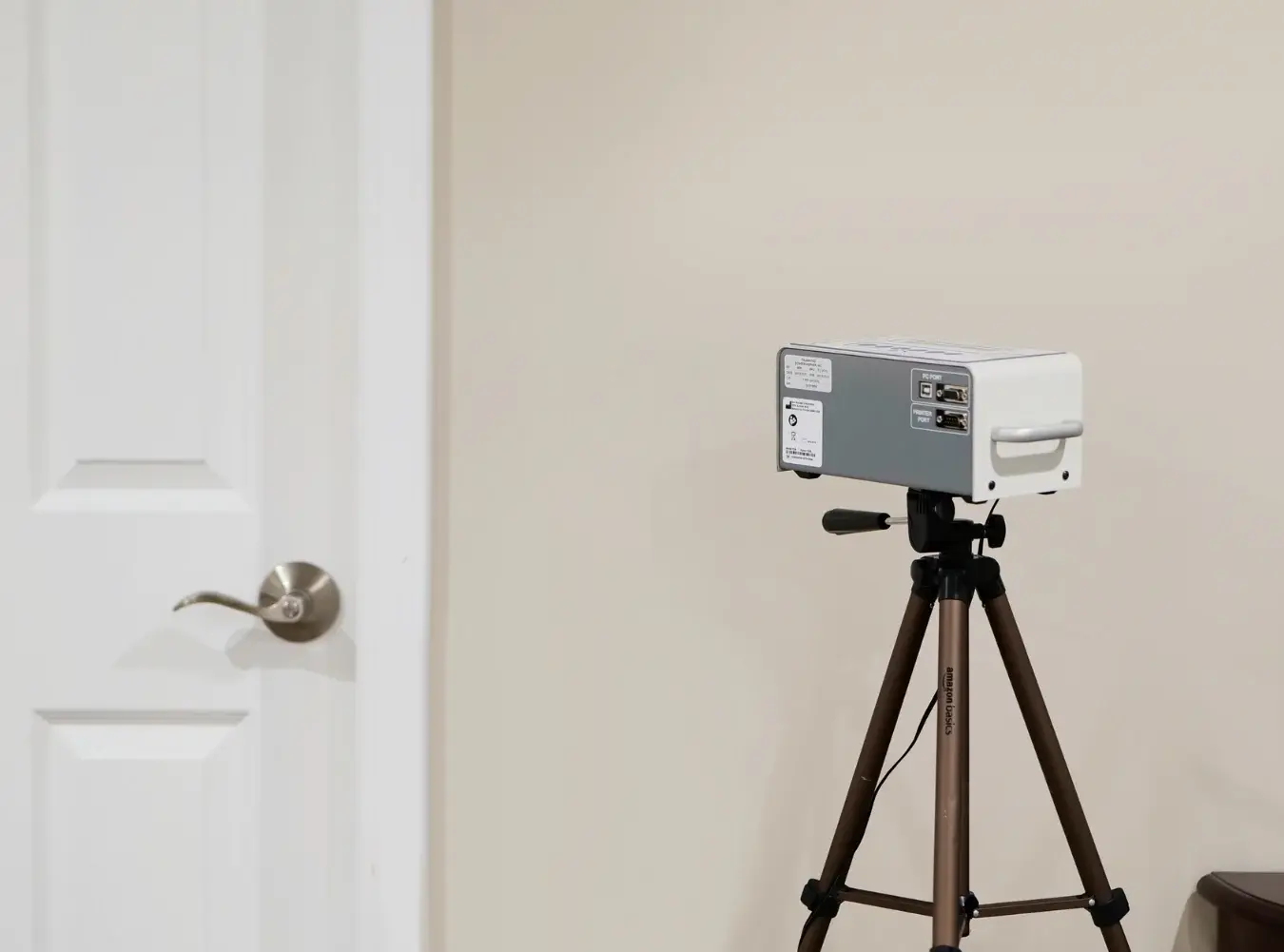
A typical short-term real estate radon test takes at least 48 hours.
The testing device is generally placed in the lowest level of the home that could reasonably be used as living space. For example, if a finished or unfinished basement could be used as a bedroom, family room, office, playroom, or other regularly occupied space, that level may be the appropriate location.
EPA guidance says the device should not be placed in areas such as closets, hallways, bathrooms, kitchens, crawl spaces, or other locations where humidity or airflow could interfere with the measurement.
Closed-House Conditions
For short-term tests lasting less than four days, EPA recommends closing windows and exterior doors for at least 12 hours before the test begins and keeping them closed throughout the test, except for normal entry and exit.
The home should otherwise continue operating normally, with heating and cooling systems used according to the testing instructions.
These conditions matter because opening windows or bringing outdoor air into the home can affect the radon concentration and potentially make the result unreliable.
Professional testing devices may also record information such as temperature, motion, barometric pressure, or other data that can help identify unusual conditions or possible interference during the test.
Types of Radon Tests
There are several ways to test for radon. The right option depends on why you're testing, how quickly you need the results, and whether the property is involved in a real estate transaction.
1. DIY Short-Term Radon Test
Short-term tests are designed to provide results relatively quickly. Depending on the device, short-term testing can last anywhere from two days to 90 days, although tests used for real estate purposes generally run for at least 48 hours.
Common devices include charcoal canisters and other passive testing devices that are sent to a laboratory after the test period.
Typical cost: approximately $10–$40 for many DIY short-term kits, although prices vary by product and whether laboratory analysis and shipping are included. Current 2026 cost data from Angi places many DIY short-term kits in this range.
DIY short-term testing can be a convenient option for homeowners who simply want to screen their home.
2. DIY Long-Term Radon Test
Long-term tests remain in the home for more than 90 days and can provide a better picture of the home's average radon level throughout different conditions and seasons.
Alpha-track and electret ion chamber devices are commonly used for long-term testing.
Typical cost: approximately $25–$60, depending on the device and laboratory services.
Long-term testing can be particularly useful when you are not working within a real estate transaction timeline and want a better representation of the home's year-round average.
3. Digital or Continuous Radon Monitor
Digital radon monitors can continuously measure and record radon levels over time. Some professional-grade continuous radon monitors also record information that can help identify unusual changes or potential interference during the test.
Consumer digital monitors generally cost more upfront than basic charcoal or other passive test kits but can be reused.
Typical consumer cost: approximately $100–$250 for many digital monitors.
4. Professional Radon Testing
Professional radon testing is often the most practical option during a home purchase or sale because the tester can handle device placement, testing conditions, documentation, and reporting.
A professional test may use a continuous radon monitor or another qualified testing device. EPA real estate guidance specifies a minimum testing period of 48 hours for these short-term approaches.
Typical cost: approximately $150–$700 nationally, although actual pricing varies considerably by location, property size, testing method, and the service provider. Current 2026 national cost data from Angi places professional testing at approximately $145–$714, with an average of $421.
For a home purchase, the additional cost of professional radon testing is often relatively small compared with the overall cost of the transaction.
Which Radon Test Should You Choose?
Test Type | Typical Duration | Approximate Cost | Common Use |
DIY short-term | 2–7 days | $10–$40 | Quick homeowner screening |
DIY long-term | 90+ days | $25–$60 | Year-round average |
Digital monitor | Ongoing | $100–$250 | Repeated monitoring |
Professional testing | Usually 48+ hours | $150–$700 | Home purchases, sales, or documented testing |
Costs vary by location, equipment, property size, and service provider. These figures are general 2026 ranges rather than guaranteed prices.
Understanding Your Radon Test Results
Radon is measured in picocuries per liter (pCi/L).
The EPA's action level is 4.0 pCi/L.
A result at or above 4.0 pCi/L does not mean the home is permanently unsafe or that the property cannot be lived in. Instead, it means EPA recommends taking action to reduce the radon level.
It is also important to understand that 4.0 pCi/L is an action level, not a line between “safe” and “unsafe.” EPA states that radon levels below 4.0 pCi/L still carry some risk and recommends considering mitigation when levels are between 2 and 4 pCi/L.
In simple terms:
Below 2 pCi/L: Lower levels are preferable, although no radon exposure is considered completely risk-free.
2–3.9 pCi/L: EPA recommends considering ways to reduce the level.
4.0 pCi/L or higher: EPA recommends fixing the home to reduce radon exposure.
A single short-term result is still a snapshot. Radon levels can vary from day to day and season to season, which is why follow-up testing may sometimes be recommended.
For real estate testing, EPA provides specific protocols for confirming results depending on the testing device and result.
What If the Home Already Has a Radon Mitigation System?
A home may already have a radon mitigation system, but that does not necessarily mean the current radon level is low.
An existing system should be evaluated and the home should still be tested.
A typical active radon reduction system uses a vent pipe and fan to draw soil gas from beneath the home and exhaust it outdoors. Sealing foundation openings can be part of the mitigation approach, but EPA does not recommend relying on sealing alone because it has not consistently been shown to reduce radon levels enough on its own.
If an active mitigation system is already installed, the system should be operating properly during the radon test.
For buyers, it is also useful to ask the seller for:
Previous radon test results
Installation information
Maintenance or repair records
Information about when the system was installed
Any documentation showing follow-up testing
A system that is present is helpful information, but the current radon measurement is what tells you what the indoor radon level is now.

What Does a Radon Mitigation System Look Like?
Many homes are mitigated using a system known as sub-slab depressurization.
A pipe is installed to draw soil gas from beneath the home. A fan creates negative pressure below the foundation and moves the gas through the pipe to the exterior, where it is released outside the home.
The exact system depends on the home's foundation and construction.
Homes with basements, crawl spaces, or slab-on-grade foundations may require different approaches. Pipe routing may be inside or outside the home, depending on the property's layout and the contractor's design.
A mitigation system may also include sealing certain openings, although sealing is generally used as part of a broader mitigation strategy rather than as the only solution.
How Much Does Radon Mitigation Cost?
This is one of the most common questions homeowners have after receiving an elevated radon test result.
The answer depends on the property, the radon level, the foundation, the system design, and how much work is required.
For a typical radon mitigation system, the Illinois Department of Public Health currently cites a usual cost of approximately $800–$1,200, depending on the reduction method and building size.
For planning purposes, homeowners may encounter costs above that range when a property is unusually large or complicated, requires multiple suction points, has difficult pipe routing, or needs additional electrical or structural work.
The EPA also notes that the cost of radon mitigation varies based on the size and design of the home and the reduction method required. Some systems can reduce radon levels by as much as 99%.
What Can Affect Radon Mitigation Cost?
Several factors can influence the final price:
Home size and layout: Larger or more complicated homes may require additional suction points or more extensive piping.
Foundation type: Basements, crawl spaces, slab-on-grade foundations, and homes with multiple foundation types can require different mitigation approaches.
Existing passive system: A newer home may already have a passive radon-resistant system that can potentially be activated by adding a fan if testing shows elevated levels.
Number of suction points: Some homes can be addressed with one suction point, while others require multiple points.
Pipe routing: The contractor must determine how to route the vent pipe from the soil beneath the home to the exterior.
Electrical requirements: Active systems require a powered fan, so electrical work may be necessary depending on the existing setup.
Additional repairs: Foundation sealing or other work may be recommended as part of the overall mitigation strategy.
Because every house is different, it is best to get a written estimate from a qualified mitigation professional rather than relying on a generic price.
Can Radon Be Reduced in a New Construction Home?
Yes, and new construction can actually make it easier to incorporate radon-resistant features.
Radon-resistant construction can include a gas-permeable layer beneath the slab, plastic sheeting, sealed foundation openings, a vent pipe, and provisions for activating the system with a fan if necessary.
However, radon-resistant construction does not guarantee that a home will have low radon levels.
The EPA recommends testing new homes after occupancy, even when radon-resistant features have been installed. If testing shows a level of 4.0 pCi/L or higher, a passive system may be activated with a fan or another mitigation approach may be recommended.
In Illinois, the Radon Resistant Construction Act requires passive radon-resistant construction in new residential construction.
Should Sellers Test for Radon Before Listing?
Sellers may want to consider testing before putting their home on the market.
A pre-listing radon test can help identify a potential issue before a buyer's inspection period. If elevated levels are found, the seller has time to obtain estimates, install a mitigation system if appropriate, and document the work.
The EPA specifically recommends that sellers test before putting their home on the market when possible and keep the test results and information about any mitigation work performed.
This can also make the transaction more straightforward because buyers have information about the home's radon history before or during the inspection process.
What If a Seller Already Has a Radon Test?
A previous test can be useful, but buyers may still request a new test.
EPA notes that a buyer may want another test if the previous test is more than two years old, the home has been renovated or altered, the original testing conditions were not properly documented, or the buyer plans to use a lower level of the home that was not tested.
How Often Should You Test for Radon?
If your home has never been tested, test it.
After that, periodic testing is a good way to monitor changes over time. EPA recommends retesting after mitigation and following significant renovations or changes in how lower levels of the home are used.
For a home sale, a previous result that is more than two years old may also be considered outdated by a buyer.
Testing again is particularly worthwhile when:
You have never tested the home
Your previous test is several years old
You installed or repaired a mitigation system
You finished or remodeled a basement
You changed how a lower level is used
You made significant changes to the home
You are preparing to buy or sell
Radon Testing in St. Charles, Geneva, Batavia and Kane County
For homeowners in the Fox Valley and western Chicago suburbs, radon testing deserves particular attention.
Kane County is classified as an EPA Zone 1 area, meaning it has the highest potential for elevated radon levels.
According to the Kane County Health Department, data from the Illinois radon dashboard shows an average test result of 4.6 pCi/L for homes in Kane County, compared with a national average of approximately 1.3 pCi/L.
That does not mean every home in St. Charles, Geneva, Batavia, Elburn, or another Kane County community has elevated radon. In fact, EPA specifically cautions against using neighboring homes or countywide averages to predict the radon level in an individual property.
Instead, the local data simply reinforces why radon testing can be an important consideration when buying or owning a home in Kane County.
For anyone searching for radon testing in St. Charles, IL, radon testing in Kane County, or radon mitigation in Illinois, the same basic principle applies: test the individual home rather than relying on regional averages.
Radon Testing and Illinois Real Estate
Illinois has specific laws and requirements related to radon and real estate transactions.
The Illinois Radon Awareness Act requires sellers of residential property to provide buyers with information about radon hazards and the state's radon testing guidelines. Illinois also has disclosure requirements concerning known radon information.
Importantly, Illinois law does not require every home to be tested before it is sold, nor does it automatically require mitigation when elevated radon is found. However, if a home has been tested, the results must be disclosed to the buyer.
Illinois also licenses professionals who perform radon measurement and mitigation through the Illinois Emergency Management Agency and Office of Homeland Security (IEMA-OHS).
If you're hiring someone for radon testing or mitigation in Illinois, checking the professional's credentials through the state program is an important step.
Frequently Asked Questions About Radon
Is radon only a problem in homes with basements?
No. Homes with basements, crawl spaces, and slab-on-grade foundations can all have elevated radon levels. Radon can enter through different pathways depending on how a home is constructed.
Can you smell radon?
No. Radon is colorless, odorless, and tasteless. Testing is the only way to determine whether a home has elevated levels.
Is a radon level below 4.0 pCi/L safe?
There is no risk-free level of radon exposure. The EPA's 4.0 pCi/L level is an action level, not a line between safe and unsafe. EPA notes that levels below 4.0 pCi/L still carry some risk and recommends considering reduction between 2 and 4 pCi/L.
What happens if my radon test is above 4.0 pCi/L?
EPA recommends taking action to reduce the radon level. A qualified mitigation professional can evaluate the home and recommend an appropriate system. Most homes can be successfully mitigated.
How long does a radon test take?
A short-term radon test takes at least 48 hours, although some testing devices require longer. Long-term tests remain in the home for more than 90 days.
Can I do a radon test myself?
Yes. DIY radon test kits are widely available, and EPA recognizes both DIY and professional testing options. Follow the test manufacturer's instructions and the applicable EPA or state testing protocol carefully.
Should I test a home that already has a radon mitigation system?
Yes. A mitigation system is designed to reduce radon, but testing is still necessary to determine the home's actual indoor radon level. If a system is already installed, make sure it is operating properly during the test.
How much does radon testing cost?
DIY short-term kits can cost around $10–$40, while professional testing commonly costs approximately $150–$700 nationally. Actual prices vary by location, property size, equipment, and testing method.
How much does radon mitigation cost?
In Illinois, the Illinois Department of Public Health currently cites a typical cost of approximately $800–$1,200 for a radon reduction system, although complicated homes can cost more.
The Bottom Line
Radon is easy to overlook because there is no visible sign that it is present. But testing is straightforward, and knowing the radon level in a home gives homeowners and buyers important information.
For buyers, radon testing can be a valuable part of the home inspection process. For sellers, testing before listing can provide an opportunity to identify and address an issue before it becomes a question during the transaction.
And if a test does reveal elevated radon, it does not mean the home is beyond saving. Radon mitigation systems are well-established, and most homes can be successfully addressed with the right system for the property.
For homeowners in St. Charles, Geneva, Batavia, Elburn, Kane County, the Fox Valley, and communities throughout Illinois, local radon data makes testing particularly relevant. But wherever you live, the same rule applies: you cannot determine a home's radon level by looking at the property or the neighborhood. You have to test.
If you're buying or selling a home and have questions about how radon testing fits into the inspection and transaction process, The McKay Group can help you understand where it fits into the larger picture and connect you with the appropriate professionals and resources.
Radon Cost Snapshot
DIY short-term test: about $10–$40
DIY long-term test: about $25–$60
Digital monitor: about $100–$250
Professional radon testing: about $150–$700 nationally
Typical Illinois radon mitigation system: about $800–$1,200
More complicated mitigation projects: potentially higher depending on the home's size, foundation, layout, and system requirements
Costs are estimates and can vary by location, property, testing method, contractor, and scope of work. For an actual project, obtain a current quote from a qualified professional.
Contact The McKay Group for Expert Guidance on Selling or Buying a Home.
At The McKay Group, we believe our job goes beyond helping you find a house or sell a property. It's also about helping our clients make informed decisions throughout the real estate process.
Understanding what happens during the inspection period, including radon testing, what the results mean, and what happens if mitigation is needed, can help you move forward with greater confidence.
If you’re getting ready to sell your home in St. Charles, Geneva, Batavia, or the surrounding Fox Valley area, The McKay Group is here to guide you every step of the way, from preparing your home to navigating radon testing and mitigation.
Ready to get started? Contact Debora and Roger today!


Comments